
You probably noticed that every winter your heating bill seemed to go up. So, you’re probably wondering if there isn’t a more efficient way to keep warm?
Lately infrared heaters have become all the rage, and many say they are more energy efficient than traditional heaters. But do infrared heaters really save you money? Let’s take a look.
Infrared Heater Basics
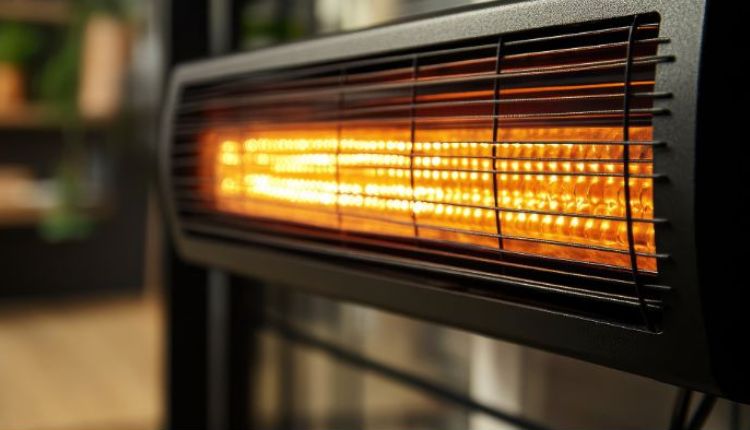
In order to understand how infrared heaters are different. It helps to understand how they work. An infrared heater is essentially a man-made sun. Instead of heating the air around you, it emits invisible infrared rays which heat people and objects directly. Because they heat you directly, you start feeling warm as soon as you step in front of one.
Remember how when you go outside on a cold day, you feel warmer when you stand in the sunshine? Infrared heaters work the same way. Therefore, your heater won’t waste any energy heating up empty air that will just leave your house out open windows and doors.
Traditional heaters on the other hand, work on an entirely different principle. The majority of heaters out there use convection to heat your home. Convection heaters warm up the air around them, which then rises up and eventually circulates throughout the room. Therefore, it will take much longer before you start feeling warm.
You have probably noticed this yourself. When you turn on a space heater or your central heating system, you usually have to wait for the entire room to heat up before you start feeling warm. Not only this but, the heat rises to the ceiling which means you’re heating unneeded space.
Comparing Efficiency
Finally, we can answer the question of which heater is more efficient at saving you money. Overall infrared heaters are more efficient than traditional heaters. However, the amount you save depends on how you use them.
Most infrared heaters are about 90-95% efficient at converting electricity into heat. Therefore, very little energy gets wasted. Traditional electric heaters are also very efficient at turning electricity into heat. The problem is that once that heat gets produced, it isn’t used as efficiently as with infrared heaters.
You might be wondering how this affects your wallet. Because infrared heaters heat you directly, you can feel comfortable at lower thermostat temperatures. You may be comfortable with an infrared heater set to 68°F but need 72°F to feel comfortable with a traditional heater.
Where infrared Heaters Work Best
The places where you will see the greatest savings are when you use infrared heaters for zone heating. Zone heating is when you only heat the areas that you use. Therefore, you won’t be wasting money heating empty rooms or hallways.
For example, let’s say you spend your evenings hanging out in the living room. You probably don’t need to heat your upstairs bedroom, downstairs bedroom, and bathrooms as well. Instead of using central heating, you could simply use an infrared heater in the living room to save money.
Infrared heaters are also ideal if you have very high ceilings or poor insulation. Traditional heaters won’t cut it in these situations because all of the heat they produce will rise to the ceiling. In contrast, infrared heaters don’t care about moving air since they heat objects instead.
How Much Money Can You Save?
Exactly how much you can save depends on a variety of factors. Your local electricity costs, how often you use the heater, and how well your house is insulated all factor in. However, most people see a noticeable decrease in their energy bills.
Consider that the average 1500 watt infrared heater costs the same amount to run as a traditional 1500 watt space heater. However, you will not need to run the infrared heater as long to feel warm. Therefore, you’ll use less energy overall.
Users have reported saving anywhere from 20-40% on their energy bills when using infrared heaters for zone heating. Because of this, most people pay off their infrared heaters within 1 or 2 winters.
When Traditional Heaters Are Better
However, infrared heaters aren’t always the better choice. Believe it or not, there actually are situations where traditional heaters are more beneficial. If you have to heat a large, open room with lots of people moving around, traditional convection heaters may be better.
Traditional central heating can also be more efficient if you plan to heat your entire house. Well-insulated homes can benefit from whole-house heating. As a result, you may want to use your current heating system for base heating. Then you can use infrared heaters as a supplement.
Extra Benefits of Infrared Heaters
Infrared heaters also have several other benefits that most people don’t think about. For starters these heaters don’t have any exposed heating elements. Nor do they have fans which gather dust. As a result, they are safer for use around children and pets. What’s more, you’ll breathe easier because they don’t dry out the air like traditional heaters do.
Lastly, infrared heaters are pretty much maintenance free. Therefore, you won’t have to spend money or time keeping them in good working condition.
So, Should You Buy An Infrared Heater?
Now that you know the differences between infrared and traditional heaters, you should be able to make a decision. If you plan on doing a lot of zone heating, infrared heaters can save you money. Therefore, they are great for home offices, bedrooms, or wherever you spend most of your time.
Just keep in mind that there isn’t a miracle heater out there. Don’t expect to cut your heating bill in half by replacing all of your traditional heaters with infrared heaters. As a result, try to invest in infrared heaters strategically.
Case Study: Infrared vs Traditional Heating in UK Flats
Here’s one real world example that shows how installing infrared heaters can outperform traditional heating systems.
One landlord swapped out older combi boilers and radiators for KIASA Smart Infrared Heater Bars in 30 UK flats in a renovated Grade II listed building. Tenants experienced far lower energy usage with their infrared panels vs the traditional system – using as little as half the energy and paying around 60 % less on heating bills due to savings from direct radiant heat and zoned control.
👉 Read the full case study: https://kiasa.co.uk/pages/case-study-transforming-a-grade-ii-listed-building-with-infrared-heating
Real reductions like these are possible because infrared heaters can provide genuine energy efficiency and comfort benefits — especially when conventional systems are less effective or uneconomical to install.
Infrared Heater vs Traditional Heater FAQs
1. Are infrared heaters more energy efficient?
Yes — because infrared heaters deliver radiant heat directly to objects and people in rooms, less energy is wasted warming the air. This can drastically reduce runtime for your heater and many users experience 20–50 % energy savings compared to traditional electric convection heaters.
2. Do infrared heaters use less electricity?
The majority of the electricity used by infrared heaters is converted directly into heat, and radiant panels improve on that by only heating occupants or objects in rooms. By not having to heat all the air in a space, infrared heaters can cut down on wasted energy versus heating systems that try.
3. Will infrared heaters save me money on energy bills?
The short answer is yes, most infrared heater users report lower energy bills than what they previously paid for traditional heating. Using infrared panels for zone heating can cut down on total heater runtime and wasted energy from heating empty rooms.
4. How do infrared heaters perform vs traditional heaters?
Traditional heating systems rely on warming air via convection then letting that warmed air circulate to eventually heat the rest of a room. Infrared panels take less time to heat spaces because radiant heat is absorbed immediately by objects/people in rooms rather than air. So you may feel comfortable at lower thermostat temperatures with infrared.
5. Do infrared heaters work well in uninsulated rooms?
Since infrared radiation heats objects not air, they can provide excellent warmth in rooms with high ceilings, drafts, and poor insulation where hot air from convection heaters will just escape.
6. Can infrared heaters replace my central heating system?
In some cases. Using infrared panels as supplemental heating for spot or zone heating can cut down on central heating usage, but many homes will still need traditional heat sources or heat pumps for whole‑house heating during colder seasons.
7. Are infrared heaters practical for daily use?
Yes — contrary to some older portable models, infrared heaters are practical and comfortable for daily use around the house. From bedroom units to wall panels, you can find modern infrared heaters designed for living rooms, bedrooms, offices and anywhere you need quiet, direct heat without blowing air (or dust!) around rooms.
Final Words
Yes infrared heaters can save you money. Since they heat objects and people directly, they work faster and allow you to feel comfortable at lower temperatures. Furthermore, infrared heaters are great for zone heating, which is where you can save the most money.
However, that doesn’t mean you should get rid of your traditional heater. Use your central heating system to keep your house at a baseline temperature. From there you can use infrared heaters to save extra money on the rooms you use.
Remember that the key to saving money during the winter is understanding how each type of heater works. Therefore, take some time to analyze your home and figure out where you’re losing the most heat.
